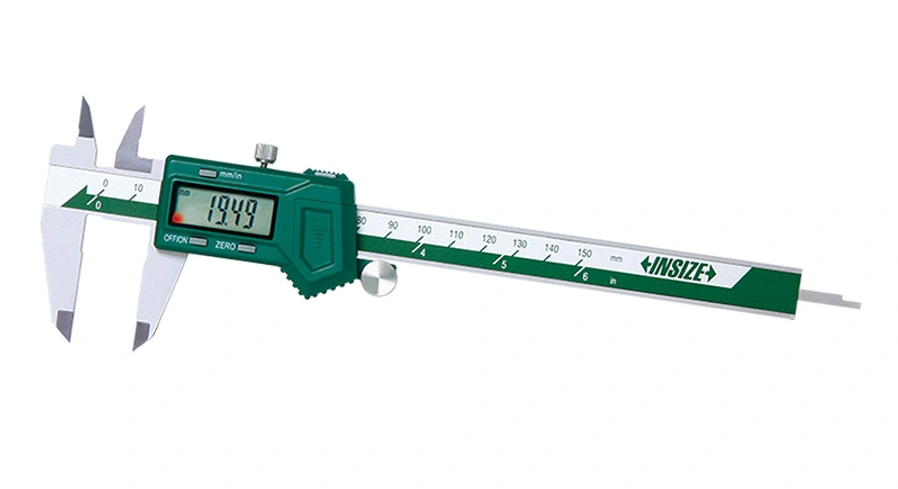
Measuring has been a key element of good manufacturing practice from the beginning. The product quality is even impacted by the smallest measurement error, whether it is related to automotive parts, precision machinery or electronic components. That is why it is crucial to choose the proper measuring instrument. Digital rules and old-line rulers are two of our most vital bench tools, as each type gives unique gains and plain perks for different plant tasks.
With production standards continually rising, producers are considering whether they are still getting what they need from traditional measuring or digital technology. By knowing the pros and cons of each, engineers, technologists and quality control personnel can make informed decisions for their work environment.
Understanding the Difference Between Digital and Vernier Calipers
The vernier and digital calipers can be used to measure the external dimensions, internal dimensions, depth and step measurements with high accuracy. There are only a few differences between the two: the first one is the way the measurement is represented.
A vernier caliper has a set of engraved measurement scales that the user must read carefully to get the measurement from the main scale and the vernier scale. A digital caliper, however, will give measurements directly on an electronic screen, thus making the measuring process quick and easy to interpret.
Both are popular in a large variety of manufacturing processes, but often one method has to be selected over the other depending on the inspection and experience of the operator and the rate of production.
Why Many Industries Are Moving Toward Digital Calipers
Efficient performance, together with precision, is becoming more important in modern factories. Digital measuring instruments enable the work to be done more quickly with less risk of mistakes being made in readings.
An insider digital caliper is usually chosen for workshops and manufacturing facilities where dependable and easy-to-use digital measurement is required. The bright screen cuts down on mistakes, especially when a big pile of parts needs a fast look during the plant run.
In the same way, lots of shops trust the fine build, tough wear, and rock-steady check power of a Mitutoyo screen scale. Good check steps work well with these screen tools, which can also bring extra perks like unit shifts, quick zero taps, and link hooks for data boxes.
Plant lines still push for automatic setups and web tracks, and these tools fit right into that trend.
Why Vernier Calipers Still Remain Relevant
Even though web tech has made huge jumps lately, old slide scales still hold a firm place on many shop floors. They do not require batteries and can work if electronic devices are impractical.
For many knowledgeable machinists and inspectors, the mechanical simplicity and reliability of the Mitutoyo vernier caliper make it a tool of choice. There is no need for electronic parts; in the workshop, the instrument can operate well under harsh conditions; the maintenance level is generally lower.
Vernier calipers are also commonly used in many technical training institutions as a means of teaching the students good precision measurement principles before they move on to digital measuring tools.
Comparing Performance in Industrial Applications
There are a few practical factors that determine which type of caliper, digital or vernier, to use.
In high-volume production where speed of inspection is important Mitutoyo digital caliper tend to be more readily available and will provide faster measurements. Vernier calipers may take longer to measure accurately, but are very reliable for easy measurement tasks or in environments where electronic equipment is not preferred.
Factors which are important to consider in comparing are:
- Speed and readability of reading.
- Accuracy and repeatability.
- Maintenance requirements.
- High resistance to corrosion.
- Digital quality control systems compatibility.
When used and calibrated correctly, both types of tools can provide great measurement accuracy.
Which Option Is Better for Quality Control?
During everyday practice, the quality control departments may be required to do hundreds or even thousands of measurements. In such cases, it’s almost as critical to be efficient as accurate.
Inspection teams can use an insize digital caliper to take measurements more efficiently and prevent interpretation errors. Digital display allows the operator to avoid fatigue during repetitive inspections, particularly when working to tight tolerances.
Similarly, in the industry where it’s important to have consistent measurement documentation, a Mitutoyo digital caliper is often chosen. Some models can transfer data directly, and the data of the inspection results can be automatically recorded in the quality management system.
This is not to say that a Mitutoyo vernier caliper is worthless, however, especially in workshops where reliability is a top priority or where a measuring tool with electronics is not desirable.
Factors to Consider Before Choosing
The appropriate measuring instrument is not always the latest technology, but rather one of the most suitable for the production needs.
Prior to making a decision, manufacturers should consider:
- The difficulty of the measurement activities.
- Daily inspection volume.
- Required measurement accuracy.
- Operator skill level.
- Environmental conditions.
- Long-term maintenance needs.
- Support for existing quality systems.
A balanced assessment assists companies in investing in equipment that meets current needs and future manufacturing objectives.
The Future of Precision Measurement
Digital measurement solutions are likely to play an even greater role with automated production systems as manufacturing moves forward with Industry 4.0 technologies. In many industries, data connectivity, real-time monitoring and digital quality reporting will be commonplace.
Despite such developments, traditional measurement methods will still have their place. Plain hand tools are steady, take little care, and still fit well for lots of checks when you just want a direct look.
Screen rules and old line sliders do not fully push each other out, but instead team up nicely for different shop floor jobs. The best pick will rest on what the task needs, your daily floor setup, and the final check run.
Conclusion
Both tool types bring good value and stay highly useful on the modern shop floor. Old-style slide scales give solid accuracy and simple dial checks, while screen rules bring fast steps, ease, and quick ways to save and track data logs. The choice between an Insize screen tool, a Mitutoyo digital rule, or a basic Mitutoyo slide rule depends on the specific job task and your floor setup. Teams seeking steady facts and top gauge tools now check out tsaifuddin.com for their main shop gear and fine build guides.