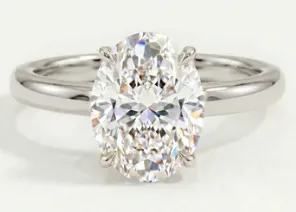
An engagement ring should feel beautiful on the first day and remain unmistakably personal decades later. Platinum is particularly well suited to that expectation. Its naturally white tone creates a crisp, refined setting for colourless stones, while its reassuring weight gives even delicate designs a sense of substance.
Exploring platinum rings by Lily Arkwright reveals how versatile the metal can be, from restrained solitaires to intricate halos, trilogy rings and diamond-set bands. The collection uses Platinum 950 across a broad range of moissanite-led designs, allowing the centre stone to remain the visual focus rather than competing with the colour of its setting.
Why Platinum Works So Well for Engagement Rings
Unlike metals that rely on plating to achieve a bright white appearance, platinum is naturally white. This matters because the claws and setting surrounding a clear gemstone appear visually discreet, helping the stone look clean, bright and uninterrupted.
Platinum is also valued for its durability and density. It develops a soft patina through wear rather than losing its distinctive character, which many people appreciate as part of the ring’s history. Its strength makes it particularly appealing for engagement rings with fine claws, detailed galleries or valuable centre stones that need a secure setting.
For those with sensitive skin, platinum can also be a thoughtful choice. High-purity Platinum 950 contains fewer additional metals than many conventional jewellery alloys and is widely regarded as suitable for sensitive wearers.
Choosing a Setting That Suits Your Style
A solitaire is the natural starting point for anyone drawn to timeless design. With no surrounding stones to distract the eye, the cut and proportions of the centre stone become especially important. Round stones offer classical brilliance, while oval, pear and marquise cuts create an elongated effect that can make the finger appear more slender.
Shoulder-set and pavé designs introduce extra light without overwhelming the centre stone. They are ideal for someone who wants noticeable sparkle from several angles, although the finer details may require slightly more attentive cleaning.
A hidden halo offers a more discreet form of embellishment. The additional stones sit beneath the centre stone and are often most visible from the side. This makes the setting feel special and considered without altering the ring’s clean appearance from above.
For greater visual impact, a traditional halo frames the centre stone with smaller diamonds or gemstones. It can make the central stone appear larger, but the overall effect is more decorative than that of a solitaire. A trilogy setting offers a different kind of presence, balancing the centre stone with two complementary side stones and creating a wider composition across the finger.
Matching the Setting to the Centre Stone
The setting should complement the stone rather than merely hold it in place. Step-cut shapes such as emerald and Asscher cuts have broad, architectural facets, so they often look most elegant in simple solitaires or refined trilogy designs. Too much surrounding detail can compete with their calm, mirror-like character.
Brilliant cuts, including round, oval and radiant stones, can comfortably support more elaborate settings because their lively sparkle remains prominent. A larger stone is not automatically the better choice. A two-carat equivalent may deliver greater presence, but it also sits more prominently on the hand and can feel less practical for someone with an active lifestyle. A well-proportioned one-carat stone in an elegant platinum setting may offer better balance, comfort and everyday versatility.
Prong choice also affects the finished look. Four claws reveal more of the stone, while six claws create a traditional appearance and provide additional points of security. Pointed or double claws can add a subtle vintage or couture-inspired detail.
Consider the Wedding Ring Early
An engagement ring should not be chosen in isolation if it will eventually sit beside a wedding band. High-set designs usually allow a straight wedding ring to rest closely alongside them. Low-profile settings may require a curved, shaped or contoured band to avoid an awkward gap.
Matching both rings in platinum creates a cohesive colour and comparable wear pattern. The band width also deserves attention: a slim engagement ring paired with a substantially wider wedding band can look intentionally modern, while similar widths create a more seamless bridal set.
Final Thought
The appeal of a platinum engagement ring lies in its balance of refinement and resilience. The metal feels luxurious without appearing ostentatious, and its cool white finish supports an exceptional range of stone shapes and settings. Choose the design according to how it will be worn—not simply how it looks in a jewellery box—and the result will feel considered, comfortable and enduringly elegant.